Garageland “Who The Hell Do You Think You Are?”

This video didn’t used to be online, but there’d been enough written about it that I could kind of review it from memory. But now that it’s been uploaded, well, there’s even more to write about.

But first, this video features nudity. Totally NSFW. Also, I’m not 100% sure if this video eventually had NZ On Air funding as it’s only in one of the three lists I use. But nonetheless, this vid is still worthy of a few paragraphs.

In their early days, Garageland made fun, colourful pop videos, but they sometimes got a little edgier with their later releases. Still, their previous video, “Gone” was a funny low-budget vid that imagined a world where Garageland were big in Asia. But things changed with “Who The Hell Do You Think You Are?”

It was directed by Myles Van Urk, the man behind “The Trip” compilation albums of “alternative grunge” from the early ’90s, and his own foray into the world of pop with the 1994 track “Sanctuary”. This time Myles was taking Garageland into the world of live nude girls.

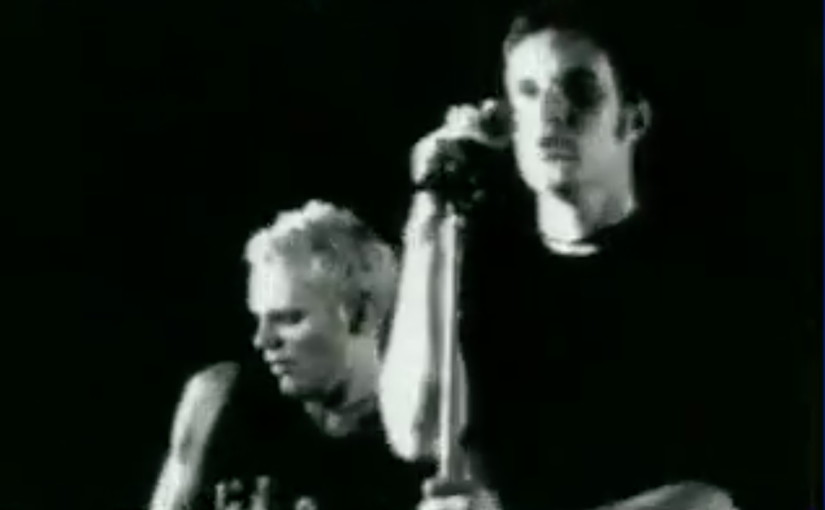
The video is a slick extravaganza, filmed in black and white and set in a strip club. The video even started with opening titles, crediting the band and the video’s director. And then came the strippers. Crotches thrust at the camera in an erotic fashion. And the boobs – the troublesome boobs.

The nudity meant it didn’t get to screen much in its unedited form. I remember seeing it screened on a late-night music video show, given all truckload of promotion because boobs. The nippless version was still restricted to after the 9.30pm watershed. But the world’s cruel reaction to his artwork seemed to take Myles by surprise. He had, after all, just wanted to create a video that was “beautiful, simple, hedonistic, ironic, potent and most importantly rock’n’roll”. Yes, ironic strippers.

As Myles explained in a 2001 statement, “It was never a question of ‘eek, let’s put some tits in here and make the video really edgy and controversial'”. No, the video just happened to end up like that.

Funnily enough, in a TVNZ article on the matter, all the producers of music video shows quoted were sympathetic to Garageland. They liked the video, they wanted to play it, it’s just that it was inappropriate for their audiences and time slots.

Myles mused, “Perhaps it’s naive to consider the music video one of the last free mediums where art and commerce don’t collide.” Lolz! Music videos are precisely all about the sticky collision of art and commerce. As the NZ Herald commented at the time, “We here thought music videos were exactly the point where art and commerce not only collide, but end up lap dancing with each other.”

So how did the “Who The Hell Do You Think You Are?” video affect Garageland’s career? Well, it created a largely bemused reaction in the media. The single didn’t chart and the album it was taken from was to be their last. But, you know, Garageland were still cool.

The lesson: you want boobies in your vid? You must pay the price.

Director: Myles Van Urk
Ngā Taonga Sound & Vision

Next… Neil’s day off.
Trinity Roots “Little Things”

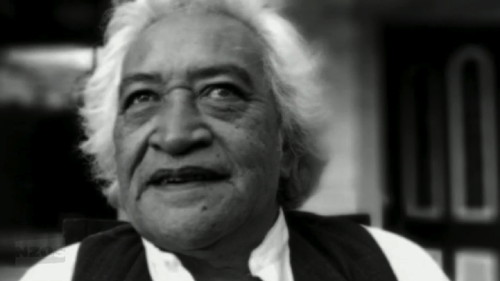
2001-trinity-roots-little-thingsThis video can be simply summed up as an old man reflecting on his life. But it’s oh so much more than that.
People love this video. They love it hard. Looking at online comments, this is a video that homesick expats use to remind them of Aotearoa. It’s a video that reminds people of their absent friends and family. It makes people feel proud to be from New Zealand. One YouTube commenter was so moved that he pasted the haka as tribute.

At the heart of the video is acclaimed actor Wi Kuki Kaa. With most of the video being a close-up on his face, he effortlessly moves through a range of emotions. And here’s the really clever thing – he is subtly moving in time with the music. A twitch of an eyebrow, a quiver of the lip moving with the cut-up beats.

The video begins with the busy preparation of a hangi in the front yard of a villa, set some time in the early 20th century. The camera slowly moves in and we see the old man sitting on the porch. Zooming right into the man’s eye, reflected on his pupil we see memories of his past – courting his sweetie and walking with his grandfather.

Back on the porch, family members come to hongi and chat with him. There are moments of happiness on his face, but there’s still a deep look of a connection with the past. One young women seems to say something harsh that upsets him, bringing tears to his eyes. And seeing an old man cry is such a horrible thing.

But comfort comes with his mokopuna. A grandson leaps up and hugs his koro, bringing a smile to the old man’s face. The camera slowly pans out on the same house but it’s in contemporary times (complete with a loft conversion) and it’s bustling with friend and family, again preparing a hangi.

Chris Graham had directed a few funded videos before, but “Little Things” was the first that went from being just a promo video to a moving creation that still has a deep effect on audiences.

Best bit: the big smoking hangi pit.

Director: Chris Graham
Ngā Taonga Sound & Vision

Next… waiting for the pizza man.

Fur Patrol “Andrew”

2001-fur-patrol-andrewLyrically, “Andrew” is like the flipside of “Lydia”. Where the earlier song was a tortured cry to an ex-lover, “Andrew” is a cynical brush-off. And like the “Lydia” video, “Andrew” is also set in a nightclub (filmed at Calibre Bar in Karangahape Road), only this time the band has hit the dance floor.
The song starts off in a quiet mode, with the band slowly moving around a nightclub. All the other patrons are frozen in mid-groove, but everyone comes to life once the song gets bold and loud with the first chorus.

Julia saunters around the dancefloor, and it looks like there’s going to be a hoedown showdown between Fur Patrol and Andrew and the rest of the club. So far it’s all very cool, but things go up several levels when Fur Patrol break into some formation dancing, that pop staple.

I think the only other NZOA music video (so far) that’s dared to do formation dancing was Deep Obsession’s “You Got the Feeling”. Points to them for having a good, sincere go at it, but it felt more like a workout than dancing. But somehow Fur Patrol’s sarcastic, gothy dancing comes across much more slicker and accomplished. It might help that we don’t see much of them from the waist down.

The dancing woos the cool nightclub crowd, eventually turning the dancefloor from sneers into smiles. Such is the power of good choreography. More New Zealand music video should have dancing.

Best bit: Julia’s fake ponytail – long, sleek and plenty of power-swish.

Director: Jonathan King
Ngā Taonga Sound & Vision

Che Fu “Fade Away”

2001-che-fu-fade-awayBack in 2001, “Fade Away” was #2 in the charts, kept off the top spot by – get this – Hear’Say’s song “Pure and Simple”. But 12 years later, it’s Che Fu’s song and not the UK reality TV popstars’ one-hit wonder that’s an enduring pop favourite around these parts.
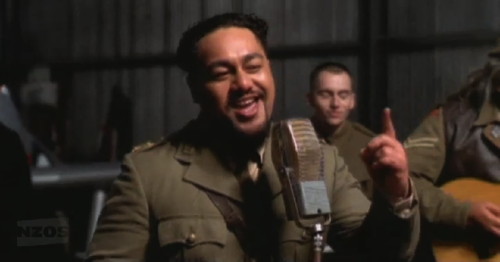
The first single off Che Fu’s second album is about being there for someone. The lyrics most obviously are about staying close to friends who bugger off overseas for their OE, but the video goes for a different sort of overseas experience, focusing on the camaraderie of soldiers during the Second World War.

Che Fu and his band the Krates are dressed as New Zealand soliders (Maori battalion, no less) and a few Allied soldiers. The video is set in the New Zealand Warbirds Association hangar out at Ardmore airport, complete with vintage aircraft casually chilling in the background. The dudes decide to have a jam, finding authentic WWII-era turntables and synths in crates. By throwing in some obvious 21st century technology, the video relieves itself of the burden of having to be historically accurate. The vibe and the energy are right and that’s all that matters.

By the way, there’s a line of te reo that is subtitled as “He thinks your a bit of a ‘Bing Crosby’.” Bloody hell. I used to make subtitles professionally and I would never ever have let a your/you’re slip through. That’s appalling.

The action isn’t confined to the hangar. We see Che out in the battlefield, marching over scenic landscape and hanging out with his battalion mates. He also has a moment where he reflects on his pounamu pendant, a reminder of home.

“Fade Away” is a really nice video. It serves as a good way of introducing Che Fu’s new band (it’s not just about him as a solo artist) and a fine way of referencing part of New Zealand’s history. For decades young New Zealanders have been going overseas, but it’s what brings them back that matters.

Best bit: Che casually writes in his notebook as stuff explodes behind him.

Directors: Matthew Metcalfe, Greg Riwai
Ngā Taonga Sound & Vision

Next… come at me, bro.

Betchadupa “Man on my Left”

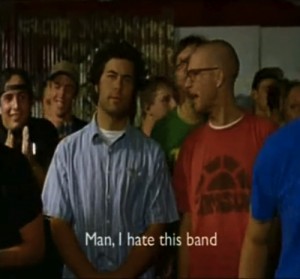
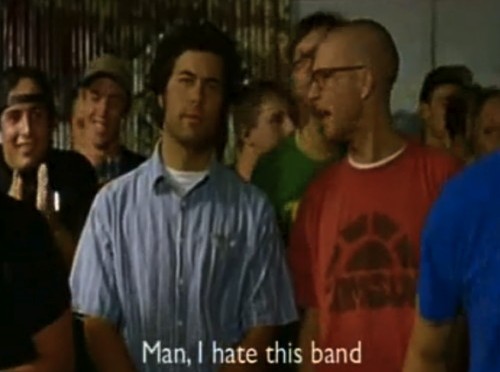
2001-betchadupa-man-on-my-leftThere’s a really simple concept behind this video. Betchadupa play their song at a cool gig while a bespectacled cynical dickhead in the audience slags them off to another guy. We follow the conversation with subtitles.
Many of Betchadupa’s previous songs have been short punk numbers, ripping through them with a burst of energy that might not even see the timecode click over to two minutes. “Man on my Left” is an epic 3:23, which prompts the dick to quip, “Wow, over two minutes. This must be one of their long songs.” Lol! But that length means they can’t just edit together a bunch of cool shots. That have to make a proper music video.

“Man on my Left” takes its inspiration from Radiohead’s “Just” video, which using subtitles to introduce another level of story into the video. The risk with this concept is that the viewer becomes so engrossed in reading the subtitles, they forget about the song. But “Man on my Left” gets around this by making the conversation about the band, with the band turning out to be the worst band ever, as far as the cynic is concerned. “How many cliche rock poses can that bass player pull,” he sneers. Eight, it turns out, as the video demonstrates.

There’s a lot of energy in the video. The audience are fully moshing, not the standard unnatural music video direction of “wave your hands in the air”. Like the band, the audience is young with energy to burn.

And then this all leads to the fun payoff at the end. “Even their music videos are lame,” moans the dickhead. “They always have punchline at the end.” The fellow he’s been talking to turns, removes his earplugs and says “I’m sorry, did you say something?” Ba-dum-chh!

Best bit: the steely close up as the dickbag sneers “predictable”.

Note: An episode of The Big Art Trip profiled video director Gerald Philips, including a rehearsal of the “Man on my Left” video. The item can be viewed in part three.

Director: Gerald Phillips
Ngā Taonga Sound & Vision

Next… peace in wartime.

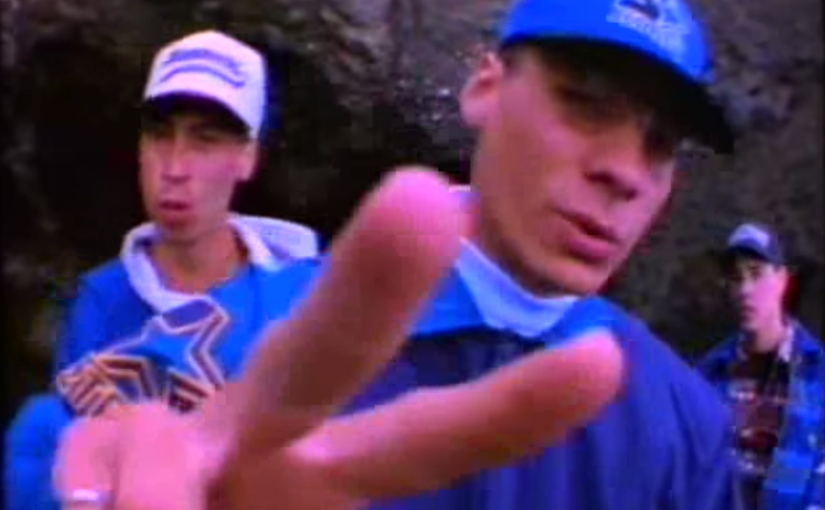
3 The Hard Way “Many Rivers”

“Many Rivers” takes its chorus and inspiration from the Jimmy Cliff classic, “Many Rivers to Cross”. It’s full of contemporary hip hop beats with extra vocals provided by Sulata and Cherie. The video funding was granted before their massive hit debut single “Hip Hop Holiday”, so presumedly someone once thought this was the strongest song.

The video sees the three lads of 3 The Hard Way go to the beach, but it ain’t no sunny seaside moment. No, it’s the rugged west coast beach at Piha with Lion Rock towering in the background as the trio hang out on the empty beach.

Sometimes the beachside setting feels like it’s getting uncomfortably close to a literal depiction of the lyrics, but there’s still that feeling of unease that comes from such a wild beach. Here are three dudes decked out in fresh urban threads, alone in the wilderness. (Given they’re all wearing long sleeves and that the beach is deserted, I’d guess this was filmed on a chilly winter’s day.)

Sulata shows up for the chorus but she’s in Devonport with an evening cityscape of Auckland looking all sexy in the background. Things seem to be far more uplifting for her in the city, and sometimes she’s joined by the boys.

We also see the trio in their natural habitat – wandering K Road at night. It’s like a roll call of dearly departed K Road retail establishments – Deka, Rendalls, Modern Bags and there was even once a Hannahs.

But the video always comes back to the beach, finally leaving us with the trio as they wander off to metaphorically cross the many rivers.

Best bit: Deka, K Road – a good place for pick ‘n’ mix.

Director: Clinton Phillips
Ngā Taonga Sound & Vision

Next… everybody have fun!

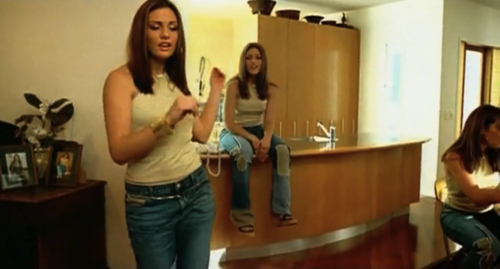
K’Lee “Broken Wings”

2000-k-lee-broken-wingsAfter having some success with his own solo career, Matty J Ruys then turned his talents to a behind-the-scenes role as a pop svengali. He needed a tuneful teen to transform into a popstar and discovered 17-year-old jeans shop worker Kaleena McNabb. She was transformed into the popstar K’Lee, though now in her role as a Mai FM DJ she goes by the more mature handle K-Lee.
K’Lee had a run of four top-20 songs, and was apparently the first female New Zealand artist to have four top-20 singles off one album. There was always a bit of backlash from people who felt that K’Lee was a bit rubbish, mainly due to being an attractive young pop singer who was suddenly enjoying hit singles without having “paid her dues”. Woteva. She made fun pop. It makes people happy. It still makes me happy. So let’s delve into the first video of K’Lee.

“Broken Wings” is a cover of the 1985 Mr Mister song. It’s actually way better than the original, with fresh beats, oriental violin motifs and an R&B break in the middle. There’s an article at NZ Musician that looks at the production of the song.

There’s some money behind this video. Directed by Greg Riwai (last seen here with Salmonella Dub’s “Johnny”), it’s shot in a fancy house and uses fancy digital effects, so Universal were obviously wanting to launch K’Lee with maximum impact as a serious popstress.

The video begins with K’Lee phoning up her ex-boyfriend – and we see another woman sitting on his couch. All he manages is a “hello” before K’Lee hangs up. She’s obviously a bit stressed, so goes over to her bedroom turntables and scratches away her sorrows. The camera slowly pans across and we discover there are two K’Lee – one scratching, the other sulking.

The rest of the video is basically multiple K’Lees mooching around the house. And it made me wonder. What if actually there were several K’Lees. What if one K’Lee started dating the guy, then the other ones wanted to get involved. And at first it was hilarious, like “The Parent Trap”, but then some of the K’Lees got jealous, and the original one was like “Nuh-uh, he’s mine!” And eventually the guy found out and was like “Screw this,” leaving all the K’Lees mopey, depressed and single. Yep, that’s plausible.

All in all, it’s a perfectly good pop video for a good pop song. It seems strange thinking that there was once controversy around K’Lee, but it didn’t stop the song making it to number two in the charts.

Best bit: when the pile of photos transform into doves.

Director: Greg Riwai
Ngā Taonga Sound & Vision

Next…warehouse party.

High Dependency Unit “Schallblüte”

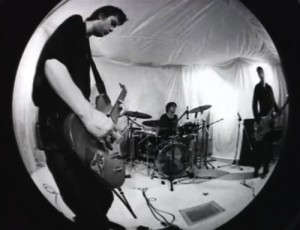
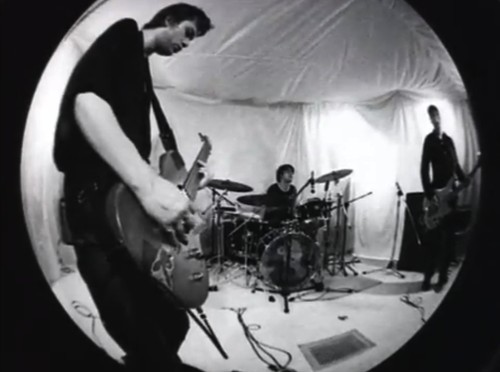
2000-hdu-schallbluteThis is an HDU video. It starts with a circle. It’s shot in black and white and we’re not looking at anything in particular. Suddenly a curtain draws back and we’re on stage with HDU, looking at the band through a fisheye lens.
The stage is draped with white, which gives the impression that they’re performing in a marquee tent, which in turn makes me think of HDU being the entertainment at a wedding. And actually, that would be quite cool. It would be one way of getting rid of your drunk auntie, anyway.

The camera spends a lot of time lingering on the drummer, then well after a minute it moves onto the guitarist, then over for some bass and, oh, go on, some vocals too. Occasionally there’s a hint of an audience, but in my experience of the world of post-rock, bands never involve the audience like traditional rock groups do. So it could actually just be a random group of people lingering off to the side (wedding guests?), rather than fans of HDU.

Things end with a bright burst of light, then a lightbulb switches off. And, ok, that’s how an HDU video ends. Choice.

Note: Roger Shepherd listed “Schallblüte” as one of his five favourite Flying Nun videos, as part of the Ngā Taonga Sound & Vision’s celebration of Flying Nun’s 30th anniversary.

Best bit: the Playboy bunny sticker at the bottom of the bass guitar.

Director: Nigel Bunn
Ngā Taonga Sound & Vision

Next… it’s smooth time.

Goodshirt “Blowing Dirt”

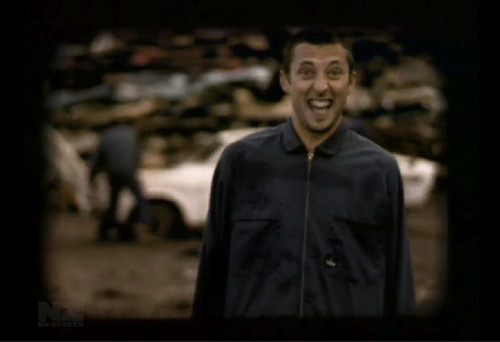
2000-goodshirt-blowing-dirtOf the four videos Joe Lonie made with Goodshirt, I’d consider “Blowing Dirt” to be the strongest. There’s a simple concept behind it, it looks good and it fits with the song. Being a Lonie video, it’s not surprisingly based around a gimmick. In this case, the video was filmed in reverse and in one take. So there’s Rodney doing a reverse lip-sync with the rest of the band un-smashing up an old car.
Two versions of the video were shot. This one has a Mazda 929 being un-wrecked, the other used a Austin 1300. The Mazda seems to be the only version online, but I figure the Austin version will be much the same – just more British and less Japanese.

So, the video starts with Rodney popping up at a wrecker yard, which gives it a slightly sinister undertone because as the world of crime drama tells us, bad things happen in wreckers.

Behind Rodney, a mechanical claw un-crushes the car, and we witness the dents and scratches and collapsed panels miraculously pop back to their original smooth shape. Once the car is back to its former shape, the rest of the band come along to un-ding the car and un-break all its windows.

So far it’s all a bit grungy, but suddenly the band change into scuba-diving gear, then a bunch of balloons floats into the boot and the lads cram themselves into car, flipper-clad feet dangling out the window. They drive off with a comedy cloud of exhaust smoke.

The “Blowing Dirt” video works because while it’s a low-budget, one-take wonder, it still manages to be both entertaining and cool, just like Goodshirt.

Best bit: the lone balloon that floats into the boot, long before his rubber brethren join him.

Director: Joe Lonie
Ngā Taonga Sound & Vision (version one, version two)

Next… an act of sabotage.

Dimmer “Seed”

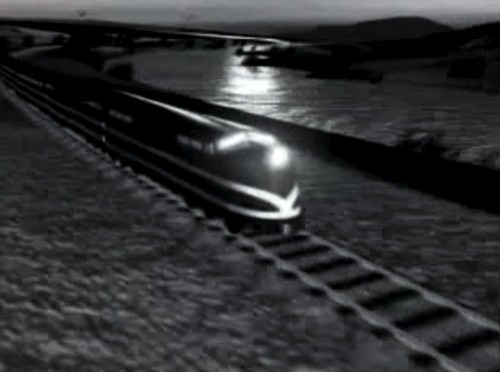
“Seed” is the second video I’ve come across that’s entirely computer animated (the first was Strawpeople’s “Drive” vid). And by this stage, it doesn’t feel like a gimmick. CGI technology has advanced enough that a talented animator (in this case, Gary Sullivan) can create a world that expresses the song.

At the heart of “Seed” is a train. We follow it as it travels through the countryside, sometimes joined by birds flying overhead. But it doesn’t quite feel like an ordinary train journey. The animation has been done in black and white, giving the video ominously gothic tones.

And then things start to get slightly surreal. Song lyrics start popping up all over the landscape. A church-like building has “hate” sitting along its roofline. Other words leap and fall with the rhythm. Then things get really surreal with the train climbing up a roof (or is it a mountain with a giant chimney?) before it falls through a giant disembodies mouth.

It actually all reminds me of the legendary “12” animation from Sesame Street. Rather than a pinball, it’s the train that’s going on a similar fantastic journey, sometimes through familiar landscapes, other times through weirdness. Though Sesame Street never had a giant floating head of Shayne Carter.

Note: there’s more behind-the-scenes info over at Ngā Taonga Sound & Vision.

Best bit: the weathervane rooster being spun around by real birds as they fly past.

Director: Gary Sullivan
Ngā Taonga Sound & Vision

Next… the case of the missing rappers.